
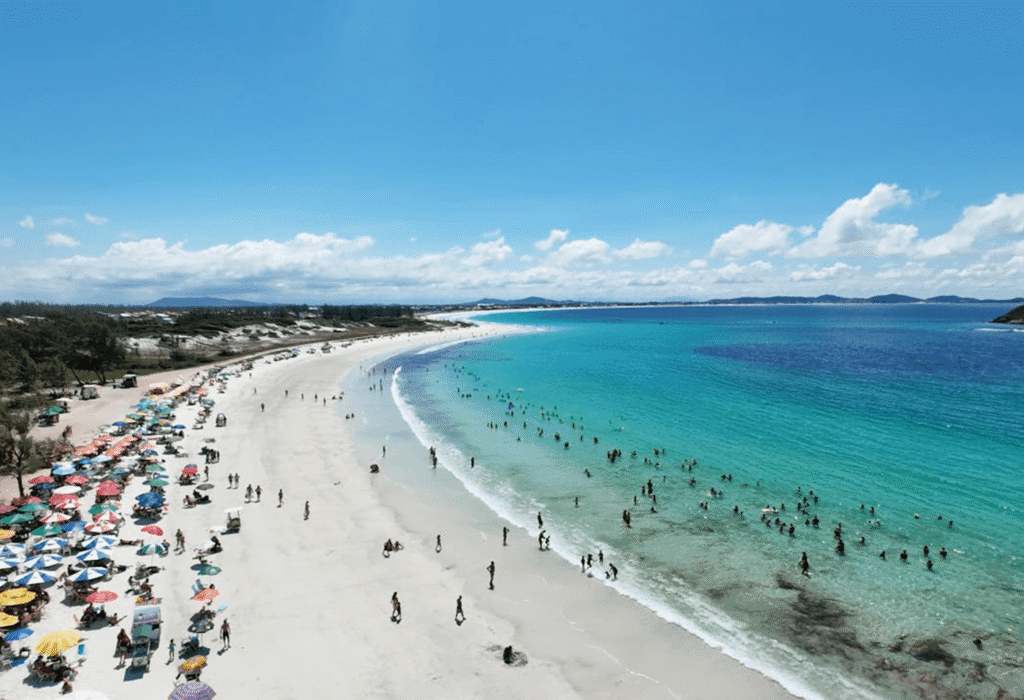
The state of Rio de Janeiro
Rio de Janeiro is known as “The Marvellous City” for a reason. It is undoubtedly a captivating, vibrant, modern haven, bursting with life and culture unlike anywhere else in the world. But did you know that Rio de Janeiro isn’t just a city? It is also a state in Brazil, encompassing 92 municipalities. Many visitors miss out on the opportunity to explore beyond the city itself.
We have put together a list of five charming destinations perfect for day-trips from Rio for you to visit during your holiday. Whether you enjoy the freshness of the mountains, the thrill of a riveting nightlife, the sight of paradisiacal beaches, or the richness of the Brazilian culture, I’m sure you won’t regret adding any of these neighbouring cities to your itinerary while visiting Rio.
1. Armação dos Búzios
Armação dos Búzios — or just Búzios, as most people call it — is located 110 miles (177km) from Rio de Janeiro, making it roughly a three hour long drive.
Known as the holiday spot for most locals in Rio, Búzios is famous for enclosing over 20 beaches along its shore, not to mention for its exciting nightlife, and its busy city centre.
Beaches
The main appeal of Búzios is, without a doubt, its beautiful beaches. But what you might not know is that, although they’re located very close to one another, each beach has distinct traits and offers a completely different experience.
Geribá Beach, for example, is the largest beach in the peninsula, and also the most famous one. It’s known for being quite lively, especially among younger crowds, thanks to its beach bars offering a wide variety of food and drinks, as well as its clear waters, which are ideal for surfing.
If you are travelling with children and would rather go somewhere less agitated and with gentler waters, Ferradura Beach might be the one for you. Similar to Geribá, Ferradura Beach can also offer you an impressive infrastructure, with kiosks, restaurants, and available restrooms. Due to the water being shallow and almost wave-free, you’ll definitely see kayaks, pedal boats, and stand-up paddleboards.
If you’re looking for a more secluded, lesser-known beach away from the crowds, Praia do Forno might be the one for you. Although smaller and not as popular, it is visually stunning. One of its most distinctive features is its pinkish sand. The beach is surrounded by restaurants, is great for snorkeling, and is framed by rocks and mountains that offer breathtaking views.
Any of these beaches would be great additions to your itinerary if you’re planning to visit Búzios. If you’d like to learn more about the beaches and find out which one suits you best, feel free to get in touch — we’d be happy to help you plan your trip.
Other Attractions
Búzios owes its popularity not only to the stunning beaches that line the peninsula, but also to the wide range of activities available beyond them.
For instance, if you are looking for a night in the city, Rua das Pedras is the place to be. There, you’ll find large spacious streets — exclusive for pedestrians — lined with luxurious stores, restaurants, bars, and vivacious nightclubs. You’ll might also come across the famous Brazilian camelôs — small street stalls where you can buy bracelets, necklaces, handmade crafts, furniture, toys, and even get your hair braided.
Another great option for enthusiasts of good quality cuisine is Porto da Barra. Opened in 2006, this inviting harbour is known for offering the most beautiful sunset in Búzios. Located near Manguinhos Beach, it provides an exceptional dining experience. In addition, you’ll find beachwear boutiques, art galleries, home décor shops, and markets. It’s less hectic than Rua das Pedras and offers a more refined and sophisticated atmosphere.
2. Paraty
Paraty is the ideal destination for those who want to enjoy crystal-clear beaches while immersing themselves in Brazilian culture and folklore. Located 155 miles (250 km) from Rio — about a four-hour drive — the city is known for its impressive historic center, stunning verdant landscapes, and, of course, its beautiful coastline.
Beaches and natural scenery
If you enjoy nature, tranquility, and hiking, you won’t regret adding Praia do Sono to your itinerary. It can only be accessed by a trail — approximately an hour and a half long — or by boat. Near the beach, there are cabins available for rent, as well as restaurants and bars. In the surrounding area, there are trails leading to waterfalls, such as the famous Saco Bravo Waterfall and the lesser-known Poço do Jacaré.
If you want to see one of the most impressive places on the Brazilian coast, you need to visit Saco do Mamanguá. It is a stretch of crystal-clear water about 5 miles (8km) long, surrounded by mountains and forest. It is part of a protected area, and the only access is by boat or trail. There, you can take boat tours, go snorkeling, explore the local biome, visit native communities, and hike to the Peak Pão de Açúcar do Mamanguá.
About a mile (2km) from the center of Paraty, you’ll find Jabaquara Beach. It has easier access than the others mentioned above and is just as beautiful. The water is extremely calm, shallow, and warm. There, you’ll find kiosks, restaurants, and inns to stay in. Even though it can be reached on foot, by bike, or even by car, you’ll still be surrounded by nature on all sides.
Historical centre
The historic center of Paraty is considered by UNESCO to be “the most harmonious colonial architectural ensemble” and was declared a World Heritage Site in 2019. The streets are all made of irregular stones and are closed to cars. The colonial houses have colorful doors and windows, and you’ll find shops, cafés, and galleries everywhere. There, you can buy local handicrafts, indigenous products, paintings, jewellery, and souvenirs. A simple walk through the historic center feels like walking through colonial Brazil itself.
The city is full of historic churches with architectural styles typical of the Brazilian colonial period. The Igreja of Santa Rita is certainly the most popular, serving as Paraty’s postcard image. In addition to it, there is also the Igreja Matriz de Nossa Senhora dos Remédios, Igreja do Rosário and many others.
Paraty is a city with a rich history and culture, and a great way to absorb all this heritage is through walking tours. This way, you can enrich your experience by learning about the city’s past involving pirates, gold, slavery, and local architecture. You can also hear about mysterious local legends, such as the ghost bride and the giant snake.
3. Angra dos Reis
If you drive 89 miles (143km) south from Rio, you’ll reach Angra dos Reis, a city famous for its crystal-clear beaches, an archipelago of over 300 islands, and beautiful rainforests. Like Búzios, Angra has become one of the most popular vacation spots for locals from Rio de Janeiro. It’s ideal for anyone that wishes to rest while also enjoying jaw-dropping landscapes.
Beaches and natural scenery
Laboratório Beach is one of the most famous beaches in Angra. It’s located near nuclear reactors, which results in slightly warmer and clearer water. The beach is monitored by the State Environmental Institute and is classified as 100% safe for swimming. The pleasant temperature attracts marine animals such as turtles, making it a popular spot for snorkeling. The beach is rustic and doesn’t have many options for renting chairs or eating at restaurants, so if you’re planning a visit, it’s advisable to bring your own items. It’s accessible by car, and the beach has its own parking lot.
Biscaia Beach is a remote and serene refuge, located 12 miles (19km) from the city centre. Despite being further away, it is one of the most popular beaches in Angra. It offers a long stretch of sand, crystal-clear greenish waters and practically no waves, making it very well-liked among families with children. Unlike Laboratório Beach, it is surrounded by restaurants, bars and guesthouses, as well as shower facilities and restrooms. Parking is paid, but it is also accessible by public transport.
If you enjoy hiking and connecting with nature, you can’t miss the opportunity to visit the Feiticeira Waterfall. It has a 40-foot (12m) drop and you can access it via a short 30-minute trail starting from Feiticeira Beach — which is accessible by boat — or a longer 2-3 hour hike through the heart of the rainforest. The waterfall is surrounded by mysterious tales regarding a lonely woman who lived many centuries ago, and is another part of Brazil’s extensive folklore.
Other attractions
Angra’s culture, like most Brazilian cities, is extremely rich. During your visit, you can’t miss the opportunity to immerse yourself in it. Stroll along Rua do Comércio, the true historical heart of Angra. There you will see colonial houses, shops, galleries, restaurants, and cafes. You can shop, walk, and learn about the local culture. In addition, you can visit the Museum of Sacred Art and General Osório Square, where you can see the Dragon Fountain.
If you have a particular interest in gastronomy, Angra will not disappoint you. The Angra dos Reis Municipal Market — also known as Mercado Redondo or Mercado do Peixe — is located in Praça Zumbi dos Palmares and was inaugurated over a century ago, in 1914. There you can enjoy fresh seafood, such as shrimp and various fish. The market is open every day and is located in the historical centre of Angra.
4. Penedo
Penedo is a city located in the south of the state, just 117 miles (189km) away from Rio de Janeiro, which is equivalent to a two-and-a-half-hour drive. The city is known for having received a mass influx of Finnish immigrants in the early 20th century. Therefore, there you can learn about Finnish culture, visit museums, have exceptional gastronomic experiences, buy handcrafted products and chocolates, and visit waterfalls. It’s not a beach town, but it exudes a lesser-known part of Brazil’s vast culture.
Waterfalls and natural sights
The Cachoeira de Deus is the largest and most famous waterfall in Penedo. It has a 50-foot (15-meter) drop and a large area for bathing and swimming. It is located about two and a half miles (4km) from the city centre and is accessible via a hike, considered very easy and relaxing, taking only 15 minutes. If you enjoy connecting with nature, away from the city, consider adding this waterfall to your travel itinerary.
The Cachoeira das Três Bacias is considered one of the most beautiful in the city. It is formed by three natural pools of crystal-clear water. It is an ideal place for those seeking tranquility with their family. Access is also relatively easy, requiring a short walk, and it is located in the upper part of the city. It is important to remember to wear grippy shoes to avoid accidents, as the rocks around the waterfall can be quite slippery.
If you enjoy hiking and are looking for beautiful views of nature, you might be interested in the Pico do Penedinho hike. Pico do Penedinho is a 1969-foot (600m) peak that offers breathtaking views of Penedo. The trail is considered moderately difficult – only 0,932 miles (1.5km) long – but you need to request permission at Casa do Chocolate to climb it. For an even more impressive view, it would be advisable to hike the trail during sunset.
Cultural activities
When visiting Penedo, you simply can’t miss Little Finland, located in the city centre. It’s practically an open-air shopping mall that honours Finnish culture, paying homage to immigration with typical Nordic architecture. The biggest attraction is Santa’s House, where you’ll find Christmas decorations, sleighs, a place to write letters, and Finnish-themed scenery. It’s open year-round, even outside of the Christmas season. The most iconic tourist attraction, though, is undoubtedly the umbrella village. Covering the fetching streets of Little Finland, you’ll see colorful umbrellas suspended in the sky, creating a truly impressive sight. If you want to buy chocolates and handmade products and sample typical foods in charming restaurants, then you need to visit Little Finland.
If you enjoy visiting museums to learn about local history, Penedo is the city for you. Among the city’s various cultural attractions, the Toy Museum and the Dona Eva Finnish Museum stand out. The Toy Museum — Lelumuseo — is a nostalgic tourist spot that seeks to bring back childhood memories, showcasing various toys that were well-liked in the 60s and 80s. There you will see slot cars, wooden toys, board games and much more. The place functions as a time tunnel, and you will witness popular items that marked the lives of children over time. At the Dona Eva Finnish Museum you will learn about the history, traditions and objects brought by the Finnish immigrants responsible for founding the city in 1929. The museum has more than a thousand pieces, such as traditional costumes, handicrafts and household items.
5. Petrópolis
Petrópolis is only 70 miles (113km) away from Rio, a journey of approximately two and a half hours. It is also not a beach town, but there you can experience history, culture, and nature. Also called the “Imperial City,” Petrópolis was created and conceived by Dom Pedro II in 1843 to serve as a refuge from the Rio de Janeiro heat during the summers. It’s the perfect city for those who enjoy the tranquility of the mountains while immersing themselves in a rich history and culture.
Activities
From 1822 to 1889, Brazil was an independent Empire, ruled by Dom Pedro I and later his successor, Dom Pedro II. The Imperial Museum in Petrópolis, inaugurated in 1943, houses one of the most important historical archives in Brazil, possessing preserved items from the Brazilian imperial era. There, you can see more than 200,000 documents, engravings, maps, and photographs. The museum’s library has more than 50,000 volumes, of which 8,000 are considered rare pieces. If you are interested in history, a visit to this museum is like entering a true time machine, allowing all visitors to have a clear view of life in the Brazilian empire.
Furthermore, you can also visit Santos Dumont’s house, the first man to ever fly an airplane in an unassisted takeoff. He lived in Petrópolis for 14 years, and his house is open to visitors, as it was donated to the municipality of Petrópolis after his death, with the aim of preserving the aviator’s memory. Dumont’s residence has many interesting peculiarities. It was the only house in Brazil to have a shower with hot water at that time, heated by alcohol. In addition, the house has an external staircase where it is only possible to climb with the right leg and an internal staircase where it is only possible to climb with the left leg. It is currently part of the National Historical and Artistic Heritage.
If you like shopping, you need to visit the largest open-air fashion hub in the Serra region of Rio: Rua Teresa. There, you’ll find more than 1200 shops focusing on clothing at affordable prices. It used to be the city’s entrance gate and received the processions of the imperial family. The shops are open from Tuesday to Saturday, from 9 am to 3 pm and on Sundays from 10 am to 7 pm.
Itaipava
Itaipava is a captivating district of Petrópolis, located about 12 miles (20km) away from the city centre. It’s an area where many people who live in Rio own houses to take refuge during the winter and also the holidays. Being away from big cities, the place is ideal for those seeking peace and quiet. You can rent a house, stay in a luxury hotel or inn and enjoy the opportunity to explore restaurants, as the district is known for being the gastronomic hub of the Serra region.
You can visit the Itaipava Fair, a commercial center and fashion hub with more than 350 stores. You will find clothes for all genders and sizes, accessories, home goods, pet items, and the place even has a food court. The fair is considered a cultural heritage of Petrópolis and has free parking.
In Itaipava there are many bars with live music, sophisticated restaurants, the trendy Tamboatá club, perfect for those who like to enjoy nightlife, and cultural spaces such as the Soberano Jazz Club. You’ll certainly have plenty of options for things to do in this charming district.
Conclusion: The cities beyond Rio
Rio is a vast and beautiful state, full of small ports of culture and beauty. Whether in the mountains, on the beaches, in the rainforests or at the waterfalls, you are guaranteed an unforgettable experience.
If you have time, rent a car or use Rio’s public transport system and go beyond the limits of the capital city, I’m sure you won’t be disappointed. I’m sure you already understand that this state is a center of history, traditions and breathtaking landscapes.
Rio de Janeiro is and always will be an impressive place and deserves to be appreciated. If you are interested in knowing what to do when visiting the city of Rio, click here. And remember, the magic of the city extends far beyond its borders, so don’t miss the chance to enjoy it.